
In today’s competitive mobile charging market, many brands, traders, e-commerce sellers, and corporate buyers want to create differentiated products through custom power banks. However, before placing an order, most buyers first ask one key question: what is the MOQ for Custom Power Banks?
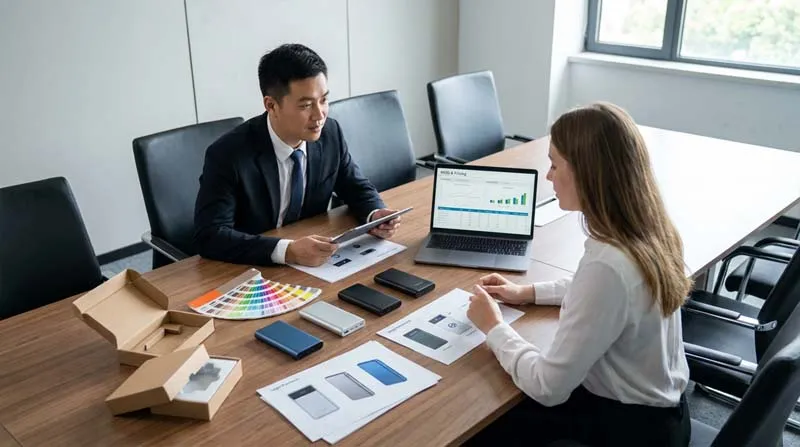
In fact, there is no single answer. The MOQ depends on the customization method, product capacity, functional requirements, packaging design, certification needs, and production complexity. Therefore, understanding the logic behind MOQ can help buyers control costs, reduce risks, and plan a more successful purchasing project.
Why Do Custom Power Banks Have MOQ Requirements?
MOQ means Minimum Order Quantity. It refers to the lowest quantity that a manufacturer can accept for a production order.
For power bank manufacturers, each order involves battery cells, PCBA production, housing materials, packaging, testing, labor, and logistics. As a result, small orders often increase the unit cost. In some cases, they may also reduce production efficiency.
Therefore, the MOQ for Custom Power Banks is not just a random rule. Instead, it reflects real manufacturing costs, supply chain requirements, and quality control needs. A reasonable MOQ helps the factory maintain stable production while giving buyers a more reliable product.
Common MOQ for Custom Power Banks
Different customization levels usually come with different MOQ ranges. Therefore, buyers should first define how deeply they want to customize the product.
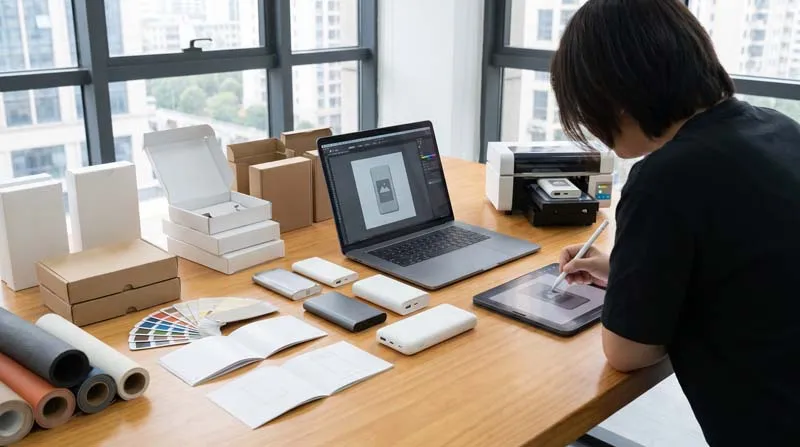
Logo Customization
Logo customization is the easiest and most flexible option. If buyers choose an existing power bank model and only add a logo, the MOQ is usually lower.
Common ranges include:
Silk screen logo: 100–300 pieces
Laser engraving logo: 100–300 pieces
UV color printing: 200–500 pieces
This option works well for promotional gifts, e-commerce product testing, and small brand launches. Also, it allows buyers to enter the market with lower investment.
Packaging Customization
If buyers need custom boxes, labels, manuals, or branded packaging, the MOQ usually increases. In many cases, packaging suppliers also have their own minimum printing quantity.
A common range is 300–500 pieces. However, some color box projects may require 500 pieces or more.
Therefore, packaging design should match the buyer’s real sales plan. For a first order, simple packaging may help reduce cost pressure.

OEM Customization
OEM customization usually uses an existing product as the base. Then, the manufacturer can adjust the logo, color, packaging, or some basic configurations.
For most OEM projects, the MOQ for Custom Power Banks is often around 500–1,000 pieces. This model is popular because it balances customization, cost, and delivery speed.
Moreover, OEM is suitable for brands that want a professional product without starting a full design project from zero.
ODM Customization
ODM customization involves deeper product development. For example, buyers may need a new appearance, structural design, magnetic charging function, wireless charging design, or foldable stand.
Because ODM requires engineering, prototyping, testing, and mold development, the MOQ is usually higher. In general, ODM projects may require 1,000–3,000 pieces or more.
If the project needs a new private mold, the MOQ may reach 5,000 pieces or above. Therefore, ODM is better for brands with a clear product strategy and stronger market confidence.
Key Factors That Affect MOQ for Custom Power Banks
Although the ranges above offer useful references, the final MOQ still depends on several practical factors.
Battery Capacity
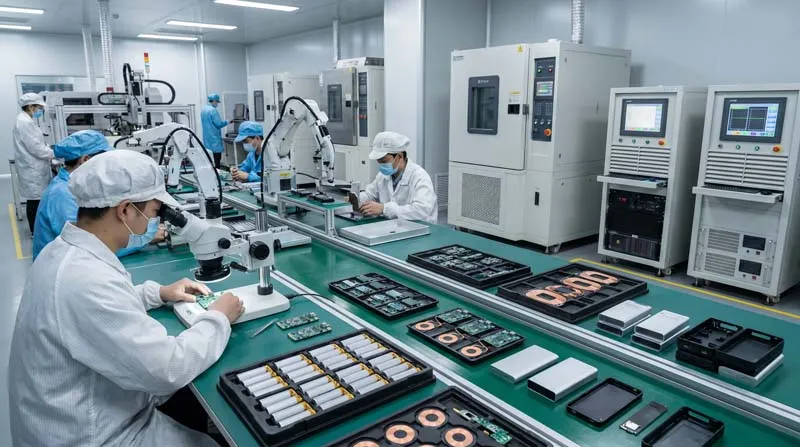
Capacity directly affects material costs. A 5,000mAh power bank, a 10,000mAh power bank, and a 20,000mAh power bank use different battery cell quantities and structures.
As capacity increases, the cost of battery cells also rises. In addition, high-capacity models may need stronger safety protection and more careful testing. Therefore, larger-capacity products may require a higher MOQ.
Product Functions
Today’s power banks often include fast charging, wireless charging, magnetic charging, multiple outputs, or digital displays. These functions make the product more attractive.
However, they also increase the cost of PCBA design, component sourcing, testing, and quality inspection. As a result, the MOQ for Custom Power Banks may rise when the product includes advanced functions.
For example, a basic USB power bank usually has a lower MOQ than a MagSafe-compatible wireless power bank.
Housing Materials
The material of the housing also affects MOQ. Common options include ABS plastic, PC fire-retardant material, and aluminum alloy.
Plastic housings are usually more cost-effective. However, aluminum alloy housings need more processing steps and higher machining costs. Therefore, metal power banks may have a higher MOQ than standard plastic models.
Packaging Requirements
Packaging can strongly influence the final order quantity. Gift boxes, eco-friendly packaging, retail color boxes, and premium business packaging all require different printing processes.
In addition, packaging factories often set their own minimum order quantity. Therefore, buyers should confirm packaging MOQ before finalizing the project.
Certification Requirements
For export orders, certifications are very important. Common requirements include CE, FCC, RoHS, UN38.3, and MSDS.
If the target market requires specific testing or documentation, the manufacturer may need extra preparation. Consequently, certification needs can affect both cost and MOQ. Therefore, buyers should clarify the target market before ordering.
How to Reduce MOQ Pressure for a First Order
For new brands, the first order often carries uncertainty. However, several practical methods can help reduce the pressure.
Choose Mature Existing Models
First, buyers can choose existing models from the manufacturer’s product line. This approach reduces development cost and shortens delivery time.
Also, mature products usually have tested structures, stable supply chains, and lower production risks. Therefore, this is one of the best ways to lower the MOQ for Custom Power Banks.
Start with Logo Customization
For market testing, logo customization is often enough. Buyers can add their brand identity without changing the product structure.
Compared with ODM development, this method is faster and safer. Moreover, it allows buyers to collect customer feedback before investing in deeper customization.
Use Standard Packaging First
Custom packaging can improve brand image. However, it may increase MOQ and cost.
Therefore, first-time buyers can use the manufacturer’s standard packaging at the beginning. After sales become stable, they can upgrade to custom retail packaging.
Work with a Flexible OEM/ODM Manufacturer
A professional manufacturer can often offer more flexible solutions. For example, it may recommend suitable existing models, combine logo customization with standard packaging, or support small-batch trial orders.
Therefore, choosing the right partner is as important as comparing prices. A reliable factory can help buyers avoid unnecessary costs and reduce project risks.
What Buyers Should Confirm Before Ordering
Before placing an order, buyers should confirm several key points with the supplier.
First, check whether the product has the required certifications. This is especially important for the European and U.S. markets.
Second, ask whether samples are available. Sample testing helps buyers verify quality, function, appearance, and packaging before mass production.
Third, confirm the production lead time. In many cases, samples take 3–7 days, while mass production may take 15–30 days. However, complex projects may need more time.
In addition, buyers should ask about warranty, after-sales service, and replacement policies. These details can protect the brand after the products enter the market.
Finally, buyers should confirm whether the supplier can support future repeat orders. If sales grow quickly, stable production capacity becomes very important.
Why Choosing the Right Power Bank Manufacturer Matters
Buying custom power banks is not only about placing an order. More importantly, it is about choosing a long-term manufacturing partner.
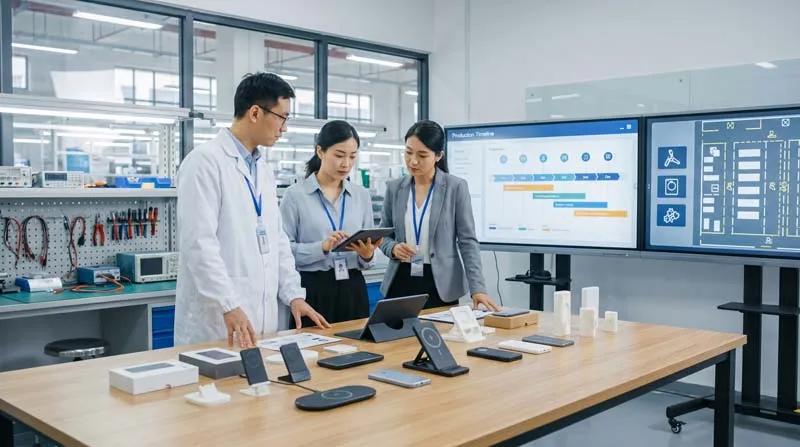
A strong power bank manufacturer should offer OEM and ODM experience, quality management, certification support, stable supply chains, fast delivery, and continuous product development.
For example, Toptai has focused on power banks and wireless charging products since 2009. The company supports OEM, ODM, brand customization, packaging design, and global export services. In addition, its ISO9001 quality management system helps buyers build more reliable mobile charging products.
Therefore, when comparing the MOQ for Custom Power Banks, buyers should not only focus on the lowest quantity. Instead, they should evaluate the manufacturer’s experience, quality control, communication ability, and long-term support.
Conclusion
The MOQ for Custom Power Banks does not have one fixed standard. It depends on the product type, customization depth, packaging, certifications, materials, functions, and supply chain costs.
For first-time buyers, the best strategy is to start with clear needs and a practical order plan. In many cases, existing models, logo customization, and standard packaging can reduce the initial MOQ pressure.
However, if a brand needs a unique product, ODM customization may offer stronger differentiation. Although the MOQ may be higher, it can create greater long-term value.
Therefore, before purchasing custom power banks, buyers should communicate fully with an experienced manufacturer. With the right planning and the right partner, brands can reduce risk, control cost, and build a stronger position in the mobile charging market.